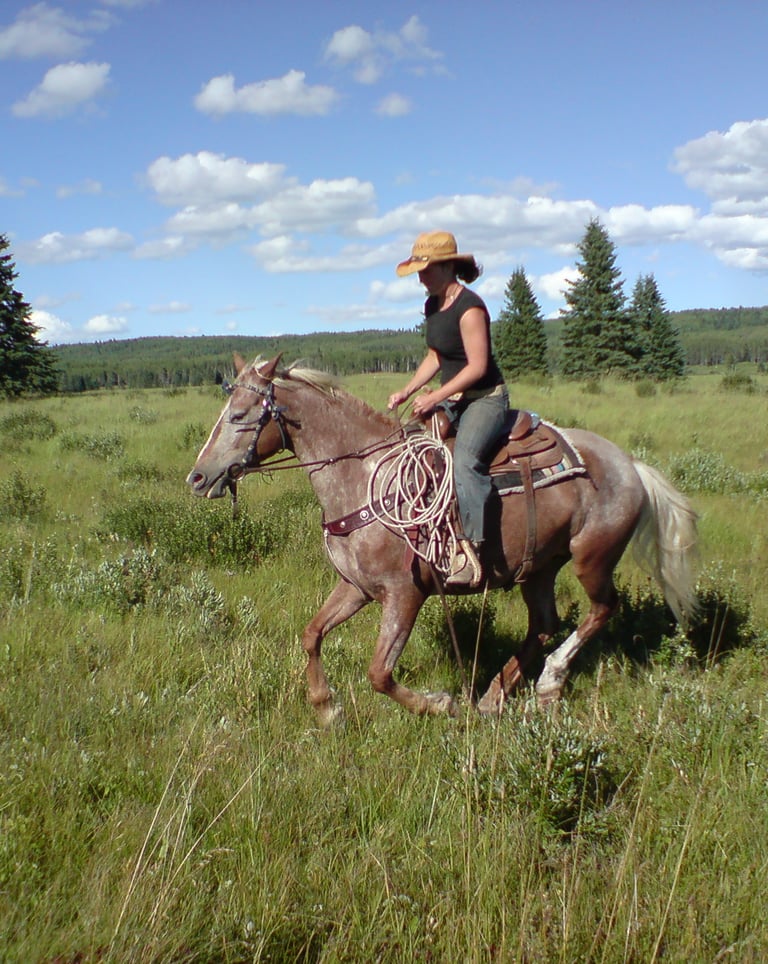
Ranch Roping - and other Ranch type competitions.

What is Ranch Roping?  Why is it getting popular in Western Canada? Where did it originate from?

In answer to these questions Denice Stewart has written the following:

Ranch roping is a new twist on keeping cowboy culture and the traditions of good livestock handling practices alive, and it is growing in popularity.

Ranch roping is the practical application of roping livestock, whether the intent is to catch a stray animal, brand cattle, or treat sick stock.  This practical approach to roping is gaining popularity among working ranch cowboys and horse owners that are interested in learning new livestock handling skills.

Riders of any skill level and age can compete in this sport provided that they are on a horse that has a little “cow savvy” and responds to signals using one hand on the rein and leg cues.

Ranch Roping Tradition

The California cowboys, traditionally referred to as vaqueros, used reata ropes and the dally method of roping livestock.  In 1927, artist Charlie Russell described the differences between the Texas cowboy and the vaquero.  He noted that the vaquero carried a 60 to 65 foot rawhide reata and swung a big loop and that these people “were strong on pretty, using plenty of hoss jewelry, silver mounted spurs, bits and conchas.”

The method of the vaquero included extra long rawhide braided ropes and soft shots that did not cause the cattle to scatter when they needed to be roped and doctored.  The vaquero’s methods were different from the cowboys of Texas who’s gear Charlie Russell described as being less fancy, with a rope seldom over 40-ft in length due to working in a lot of bush country and being forced to swing a smaller loop.  This style is similar to the team roping seen in the rodeo arena today.

Evolution of Ranch Roping in Alberta.

In the late 1990s, the Medicine Tree Ranch Rodeo commandeered Keith Stewart and other area ranch ropers to organize a ranch roping jackpot as an event prior to their annual ranch rodeo.

The ranch roping competition provided an extra-curricular activity for the ranch rodeo contestants, many of whom traveled from the interior of British Columbia and southern Saskatchewan to attend.

The rules of competition were loosely based on the Northern Range Ranch Roping rules, which held a couple of competitions in the Northern USA.

In 2004 the Canadian Ranch Roping Association (CRRA0 was founded by a group of like-minded and enthusiastic ranchers and ropers from Alberta and Saskatchewan.  Using the Northern Ranch Roping rules as a guideline, the CRRA (as a non for profit association) appointed a board of directors, established a set of rules and began sanctioning ranch ropings to qualify for an annual finals.

The mandate of the CRRA is to promote traditional ranch roping that encourages low-stress livestock handling, participant safety, and with the focus on horsemanship using both functional and fancy loops.  Each CRRA sanctioned roping must use the rules and regulations of the CRRA and include a novice event to encourage new participants.

In 2006 the CRRA sanctioned 19 ranch roping events, with a growing membership of over 100 persons.

The CRRA also hosts a website at www.canadianranchroping.ca that posts information on rules and lists sanctioned ranch ropings.  If you are interested in learning more or want to attend a ranch roping clinic, visit www.KeithStewart.ca or call (403) 601-7370,  or call Jim Cumberland at 403 227 7855

Home